
Construction Equipment Cleaning in Nashville & Middle Tennessee
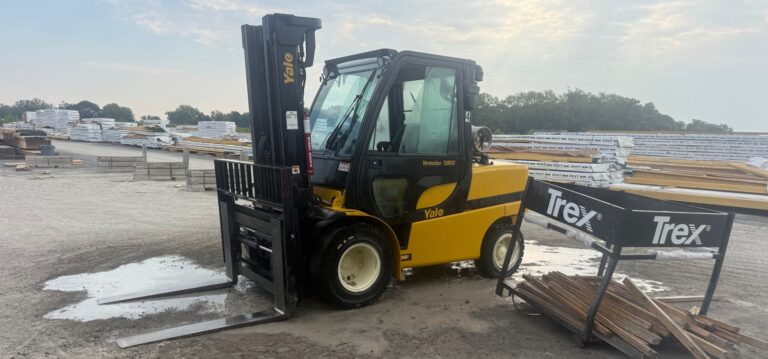
Shazam Detailing provides construction equipment cleaning on active jobsites and contractor yards throughout Nashville and Middle Tennessee, covering skid steers, mini excavators, telehandlers, compactors, mixers, pickups and service bodies. The crew is mobile within roughly 30 to 50 miles of Nashville, has worked out of Greenbrier, TN since 2001, and cleans equipment where it is parked instead of hauling it in.
Pricing
Exterior Cleaning -Starts at $250
Interior Cleaning – Starts at $250
What makes jobsite cleaning different from yard cleaning?
Timing and access. A machine in your yard gets cleaned whenever the schedule allows. A machine on an active site has to be cleaned in the window between the work that dirtied it and the work that comes next, in a space shared with other trades. The crew works around your sequence, cleans the units you point at, and gets off the pad.
The other difference is what is on the machine. Yard dirt is old and dry. Jobsite contamination is fresh, mixed and often still curing, which is both an opportunity and a deadline.
How do you remove concrete, mortar and grout splatter?
Fresh is easy. Cured is work. That is the whole rule.
Concrete slurry, mortar splatter, grout, thinset and drywall mud all wash off with ordinary effort in the first hours after they land. Once cement chemistry cures onto paint, glass or steel, removal becomes a slower process of softening, dwell time and controlled mechanical work in stages, so the surface underneath survives. On glass and hard steel there is room to work. On painted sheet metal, decals and polycarbonate cab glazing there is far less, and heavy cured splatter sometimes leaves an etched shadow after the deposit itself is gone.
Which is the argument for calling early: the job gets harder every week the splatter sits. The same is true of overspray from a painter working nearby, covered on the decal, foam and paint removal page.
What about mud, clay and site dirt?
Middle Tennessee sites sit on clay, and clay behaves differently from ordinary dirt. It packs into undercarriages, wheel wells, step treads and frame rails, holds water against steel and dries into a shell that shrugs off a rinse.
Cleaning it means flushing it out of the places it collects: track frames and roller areas, wheel wells and inner fenders, the underside of decks and running gear, and the steps and grab handles crews use all day. Mud-slick steps are how people get hurt getting off a machine.
There is a public-facing reason too. Construction stormwater permitting in Tennessee is administered by the Tennessee Department of Environment and Conservation, and sediment tracked onto public roads draws attention on inspected projects. General contractors push that into their subcontractor requirements as site-cleanliness language, and cleaning equipment before it leaves the pad is part of staying on the right side of it.
All of our ingredients are bio-degradable, earth friendly products.
When should equipment be cleaned during a project?
At phase changes and at demobilization. Contamination compounds: a machine that finishes site work covered in clay and then works through the concrete phase ends up with cured splatter bonded on top of dried mud, and you pay to remove two layers instead of one. Cleaning at phase transitions also protects the work you are handing off, since a telehandler carrying clay across a fresh slab creates cleanup someone else bills back to you.
Demobilization cleaning is the wash before equipment leaves a site, and it is the one most contractors skip and then regret. That machine is about to be loaded on a trailer, driven on public roads and unloaded somewhere else, sometimes at a rental yard that inspects it and bills for what it finds. Cleaning at demob stops mud shedding off a load in transit, lets you photograph condition before the machine leaves your control, keeps site material off the next project, and removes the excuse for a cleaning charge-back on rented units.
A phase or demob clean typically covers:
- Exterior wash of the machine body, boom, attachments and counterweight
- Undercarriage, track frames or wheel wells flushed of packed clay and debris
- Concrete, mortar, grout and drywall residue removed from bodywork and glass
- Steps, handrails and access points cleaned for safe loading
- Cab interior vacuumed and wiped, including floor mats, controls and glass
- Attachments, buckets, forks and couplers cleaned with the host machine
- Trailers and low-boys washed down when part of the move
- Pickups, dump trucks and service bodies in the same visit
Why does clean branded equipment matter on visible jobs?
On a hospital campus, a school, a retail center or an urban infill project, your machines are advertising whether you intended them to be or not. Your name sits on the door, the boom or the tailgate in front of the client’s customers and the owner’s rep for the length of the contract.
General contractors notice. So do owners deciding who gets invited to bid the next phase. Equipment that looks maintained reads as a company that maintains things. And branding only works if it is legible: graphics buried under clay are not doing the job you paid a wrap shop for.
How do you handle the pickups and service bodies?
Most contractors do not run a pure equipment fleet. They run machines plus half-tons, dump trucks, flatbeds and service bodies, and those trucks are the units that visit clients and sit in front of offices.
They get cleaned on the same visit: exterior wash, wheels and tires, bed or service body, glass, and an interior that has spent six months collecting gravel, coffee and paperwork. Service bodies get the compartments and door jambs addressed, since that is where dust and hardware collect. Contractors with a mixed fleet usually set this up as a recurring program through fleet washing or fleet detailing rather than calling unit by unit.
| Unit type | Common contamination | Best time to clean |
|---|---|---|
| Skid steer / track loader | Clay in tracks, concrete splatter, mud on steps | Phase change and demob |
| Mini excavator / telehandler | Packed clay, grout and slurry on boom and glass | Before the next project |
| Mixer / pump support unit | Cured slurry on drum, chutes, hoppers, bodywork | Within days of the pour |
| Dump truck / flatbed | Bed buildup, wheel wells, road film | On a recurring cycle |
| Pickup / service body | Site dust, mud, interior grit, compartment dirt | Monthly, or before client weeks |
Ready for Your Vehicle to Shine?
Call us at shazamdetailingllc@gmail.com.
Frequently asked questions about construction equipment cleaning
Can you clean equipment while the site is still active?
Usually yes. The crew coordinates with your superintendent on where to set up, which units to work and what window is available, then stays out of the way of other trades. Sites with restricted access or badge requirements are workable as long as you mention them when scheduling instead of at the gate.
Will cured concrete come off without damaging the paint?
Cured cement deposits can be removed from most surfaces, but the result depends on how long it sat and what is underneath. Fresh splatter comes off cleanly. Long-cured splatter on painted panels sometimes leaves an etched mark, because the cement attacked the finish while it sat. You will be told what to expect before work starts.
How often should a contractor clean the fleet?
It depends on the work. Sitework and utility contractors usually clean at phase changes and at demob. Contractors on long, visible commercial projects often run a recurring cycle so machines and trucks stay presentable through the contract. There is no minimum amount of vehicles to qualify for our fleet program
Do you also clean the heavy iron?
Yes. Larger excavators, dozers, loaders and haul trucks, including undercarriage degreasing and engine bay work, are covered on the heavy equipment cleaning page.
Schedule construction equipment cleaning in Middle Tennessee
Call Shazam Detailing at 615-633-2538 to schedule jobsite equipment cleaning, concrete splatter removal or demobilization cleaning. The crew travels to sites and yards in Greenbrier, Springfield, White House, Portland, Goodlettsville, Madison, Hendersonville, Gallatin, Nashville, Brentwood, Franklin, Mt. Juliet, Lebanon, Smyrna, Antioch, Spring Hill, Clarksville and Dickson, roughly 30 to 50 miles out from Nashville. Cleaning commercial equipment since 2001, rated 4.7 stars on Google.
Request a Call Back
Want us to clean your vehicle? Have a question? Enter your details here, and we will call you back soon.
Call Us:
615-633-2538Working Hours:
07:00 AM - 5:00 PM (Mon-Fri)
Our Address
2348 Industrial Drive
Greenbrier, TN 37073
Opening Hours
Monday – Friday:
7:00 AM – 5:00 PM
Saturday: 7:00 AM – 12:00 PM
If you have any questions, feel free to contact us here.
We Support:

Copyright © 2025 Shazam Detailing, LLC. All rights reserved. Design by Render Results.
Privacy Policy