
Classic & Vintage Car Detailing in Nashville
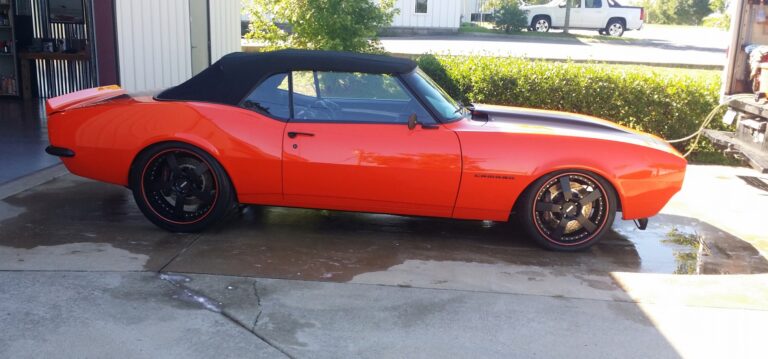
Shazam Detailing provides classic, vintage and antique car detailing in Nashville and Middle Tennessee, working by hand on original single-stage paint, chrome brightwork and period interiors. Classic vehicles are quoted individually rather than off a price list, because condition and originality matter more than size. Shazam Detailing has been detailing vehicles since 2001 from 2348 Industrial Drive in Greenbrier, TN.
Pricing
Exterior Wash: $100
Interior & Exterior Detail: $350
Why is a classic car detailed differently from a modern car?
Because on a classic, the finish itself is part of what the car is worth, and most of the damage done to old cars is done by people trying to improve them.
A modern vehicle has clear coat over base color, which gives you a measurable sacrificial layer to work with. Many pre-1985 cars have single-stage paint, where color and gloss are the same layer. Older cars also carry materials that no longer exist in new vehicles: chrome-plated steel bumpers, stainless brightwork, pot metal, cloth headliners, painted dashboards and lacquer-era finishes. Each has its own failure mode, and most cannot be replaced with a part off a shelf.
What is single-stage paint, and why does it change the approach?
Single-stage paint has the pigment and the gloss in one layer. It oxidizes on the surface over decades, which is why a wash mitt on an old red car comes back pink. That color on the towel is the paint. Clear coat, introduced across the industry through the 1980s, puts a transparent layer over the color, so polishing removes clear rather than pigment.
| Factor | Single-stage paint | Modern clear coat |
|---|---|---|
| Layer structure | Color and gloss in one layer | Color under a separate clear layer |
| What polishing removes | Pigment itself | Clear coat only |
| Oxidation appearance | Chalky, color transfers to the towel | Dull or hazy, no color transfer |
| Margin for error | Very small, often unknown | Larger but still finite |
| Right first step | Assess, then clean and feed the paint | Decontaminate, then correct |
| When to stop | As soon as gloss returns | When the defect is level |
| Repaint risk | Original finish cannot be recreated | Panel can be refinished |
Single-stage paint that is still original and presentable is worth protecting. In many cases the best result comes from cleaning, gentle decontamination, a mild cleaner-glaze and a protective wax rather than aggressive machine work.
When should original paint not be machine polished?
This is the most important question on the page, and the answer is not always what an owner wants to hear.
Original paint should be left alone, or treated very conservatively, when it is thin, when previous owners have already polished it repeatedly, when edges and body lines show primer or bare metal, when panels have crazing or checking, or when the car’s value rests on its originality. A survivor with honest patina and intact original paint is generally worth more preserved than made shiny.
There is no way to add paint back. Anyone willing to guarantee a mirror finish on unknown 60-year-old paint before assessing it is guessing with something that cannot be replaced. The right process is to evaluate the finish, test a small inconspicuous area, then talk through the options before touching the visible panels.
For repainted cars the calculus changes. A modern respray with clear coat can be corrected like a modern car, though it is still worth knowing when the paint was applied.
How are chrome and brightwork handled?
Chrome is where a classic looks either loved or neglected, and it is slow work.
Bumpers, grilles, trim spears, window surrounds, hubcaps and script badges are cleaned and polished by hand, then sealed to slow future oxidation. Where plating has failed and pitting has set in, the base metal is already corroded and no polish restores plating. That gets identified honestly rather than worked at until something wears through. Stainless trim takes a different approach again, and anodized aluminum trim, common on cars of the 1950s and 60s, loses its finish permanently if it is treated like chrome.
How are original and restored interiors treated?
Original interiors are handled as preservation. Old vinyl, cloth, wool broadcloth and mohair are cleaned gently, with attention to seams and stitching weakened over decades. Original leather is fed rather than stripped. Bakelite knobs, painted metal dashboards and clear plastic gauge lenses each get products matched to them, since gauge lenses in particular craze permanently under a modern cleaner.
Restored interiors with new upholstery take more conventional cleaning, and the useful thing is knowing what the restorer actually used. Carpets, trunk mats and spare tire wells hold decades of dirt. Musty odors usually trace to moisture in the carpet padding or the trunk, and finding the source matters more than masking it.
What is involved in car show preparation?
Show prep works from the ground up and the inside out, because judges look where owners do not: wheel wells, the backs of bumpers, the underside of the hood and trunk lid, door jambs, the engine bay, exhaust tips and glass edges. Organizations like the Antique Automobile Club of America build their judging around authenticity and condition, so the car is cleaned to show honestly rather than dressed up with products that look wrong on a period vehicle. Tire shine that gleams like a new car is often a mistake on a 1957 sedan. Book show prep with lead time; a thorough job on a classic should never be rushed.
How should a classic be prepared for storage?
Cars sitting still deteriorate quietly, and moisture does most of it. Before a car goes away for a season it should be washed and dried completely, including jambs, trunk channels and the underside. Paint should be protected, chrome cleaned and sealed, and leather conditioned so it does not crack in an unheated garage. Middle Tennessee humidity is the local complication: a car stored damp under a cover holds that moisture against the paint and interior for months.
Ready for Your Vehicle to Shine?
Call us at shazamdetailingllc@gmail.com.
Frequently asked questions about classic car detailing
How much does classic car detailing cost?
Classics are quoted individually. Condition, originality, the amount of chrome, and whether the paint is original single-stage or a modern respray all change the hours substantially. A clean and protect on a well-kept car is a very different job from a car that sat in a barn. Call with the year, make, model and a description of the paint.
Do you work on cars with original patina?
Yes, and preserving patina is a legitimate goal. If you want the car cleaned and protected without changing its character, say so up front and the work is planned around that. Cleaning, decontaminating and protecting original paint does not require polishing it.
Will you come to me or should I bring the car?
Shazam Detailing is mobile and travels across Middle Tennessee, and there is also a shop at 2348 Industrial Drive in Greenbrier, TN, which many classic owners prefer for careful paint work. Hours are Monday through Friday, 7:00 AM to 5:00 PM, and Saturday 7:00 AM to 12:00 PM.
Can you fix oxidized, chalky paint on an old car?
Often the appearance improves a great deal, but it depends entirely on how much paint is left. Surface oxidation on a healthy single-stage finish usually responds to careful cleaning and a mild polish. Paint that is thin, checked or already polished down by previous owners may be preserved rather than corrected. That judgment is made after seeing the car.
Do you detail classic trucks and vintage motorcycles too?
Yes. Shazam Detailing works on almost everything with an engine, including classic pickups and muscle cars. Vintage bikes are covered on the motorcycle detailing page and quoted the same way, per machine and condition.
Request a classic car quote
Call Shazam Detailing at 615-633-2538 to discuss your car and get an individual quote. The team serves Greenbrier, Springfield, White House, Hendersonville, Gallatin, Goodlettsville, Nashville, Brentwood, Franklin, Mt. Juliet, Smyrna, Spring Hill, Clarksville, Dickson and the surrounding counties. Rated 4.7 stars on Google and detailing vehicles since 2001. See all auto detailing services.
Request a Call Back
Want us to clean your vehicle? Have a question? Enter your details here, and we will call you back soon.
Call Us:
615-633-2538Working Hours:
07:00 AM - 5:00 PM (Mon-Fri)
Our Address
2348 Industrial Drive
Greenbrier, TN 37073
Opening Hours
Monday – Friday:
7:00 AM – 5:00 PM
Saturday: 7:00 AM – 12:00 PM
If you have any questions, feel free to contact us here.
We Support:

Copyright © 2025 Shazam Detailing, LLC. All rights reserved. Design by Render Results.
Privacy Policy