
Decal, Foam & Paint Removal in Nashville & Middle Tennessee
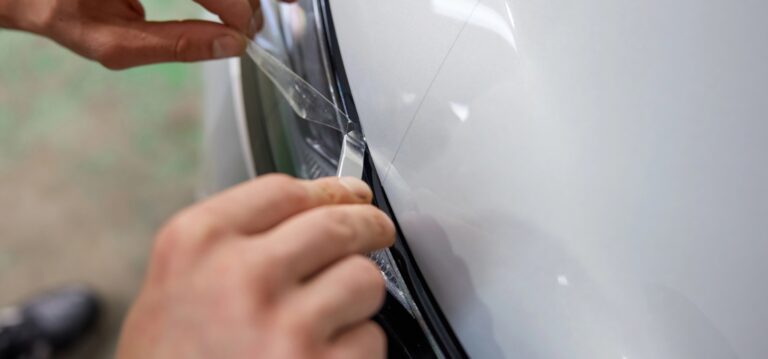
Shazam Detailing removes vehicle wraps, decals, cut lettering, foam-mounted emblems, adhesive residue, overspray and paint transfer from commercial vehicles throughout Nashville and Middle Tennessee. The crew is mobile within roughly 30 to 50 miles of Nashville, works on vans, box trucks, pickups, tractors and trailers at your yard, and has handled commercial finishes since 2001.
Pricing
Starting at $350 to $1,500+
When does a fleet need graphics removed?
Almost always at a turnover point, and usually on a deadline. A unit is being sold and the buyer is not buying your brand identity. A leased vehicle is going back and the lessor charges for graphics left on the paint. A company was acquired or rebranded and every door carries the old logo. A wrap reached the end of its life and a new one is going on, so the old film has to come off first.
All of these end in the same request: get it off, get it clean, and do not ruin the paint doing it. There is a security angle too. A vehicle that leaves your fleet still wearing your name is a liability, because whoever drives it next represents your company on the road.
How is a vinyl wrap or cut lettering removed?
Film is warmed to soften both the vinyl and the adhesive beneath it, then lifted at a controlled angle and low, steady speed so the adhesive releases instead of tearing and leaving a layer behind. Rushing this is how a two-hour job turns into a full day of adhesive work. After the film is off, the remaining adhesive is dissolved in stages and the panel is washed, decontaminated and polished as needed.
Cut lettering behaves differently. Individual letters, USDOT and MC numbers and small logos have far more edges relative to their area and use a stronger, longer-service film, so they come off in pieces rather than sheets. Foam-mounted items are their own category: emblems, badges and moldings set on double-sided tape leave a thick adhesive layer that has to be cut and dissolved rather than pulled.
Film manufacturers such as 3M and Avery Dennison publish removal guidance and rate their films for a defined service life. Removal difficulty rises sharply once a film has been on past that rating, which is why old graphics cost more to take off.
What is ghosting, and can it be fixed?
Ghosting is the outline of the old graphic still visible after the graphic itself is gone. It has two causes, and they respond very differently.
The first is adhesive residue and film haze left on the surface, sometimes microscopically thin. That is a cleaning and polishing problem, and it usually comes out.
The second is differential fading. Paint under a decal was shaded from ultraviolet exposure for years while the paint around it was not, so the covered area is genuinely less faded. That difference is in the paint, not on top of it. Polishing reduces the contrast by leveling and refreshing the surrounding finish, and on many vehicles the improvement is large. On badly weathered single-stage paint, a shadow can remain. Ghosting from real fade is improved, not always erased. The same goes for clear coat failing under old film: once it is compromised, no cleaning restores it, and the next step is a body shop.
How do you remove overspray and paint transfer?
Overspray is a mist of dried paint sitting on top of your finish, picked up from a nearby paint job, a building crew or a striping truck. Paint transfer is a smear of another object’s paint left by contact, common on box truck corners, mirrors and trailer sides.
Both are removed mechanically and chemically in stages, starting with the least aggressive method that works. The variables are how long the paint has been curing and whether it bonded to the clear coat or merely rests on it. Fresh overspray comes off with decontamination and light correction. Overspray baked on for a season is a longer job. Paint transfer that reached the primer is body work and gets called that.
What does removal include?
- Assessment of the graphic type, age and the paint condition underneath
- Vinyl wrap, printed film, cut lettering, DOT and unit number removal
- Foam-mounted emblem, badge and molding removal, including the tape layer
- Adhesive residue dissolved and cleaned from the panel
- Glass decal and window perforation film removal
- Overspray and paint transfer removal on painted panels, glass and trim
- Wash, decontamination and machine polishing to reduce ghosting
- Surface prep so a new wrap or new lettering installs cleanly
- A straight report on any area removal will not fully restore
Why remove graphics before resale, not after?
Because the alternatives cost more. A dealer or auction buyer discounts a vehicle that still wears somebody else’s logo, since they either eat the removal cost or resell it as-is for less. A lease return company bills for removal at their own rate and does not consult you on quality. And a private buyer who strips the wrap himself with a heat gun and a razor blade does damage that was never going to be your problem until he calls about it.
Do it before the vehicle is listed, photographed and priced. Clean, unbranded paint photographs better, appraises better and moves faster. Pair it with fleet detailing and the vehicle presents as a maintained asset, not a retired work truck.
What determines the result?
| Factor | Easier removal | Harder removal |
|---|---|---|
| Age of the graphic | Within the film’s rated life | Years past its rating |
| Sun exposure | Shaded or garaged unit | South-facing panels, roofs, hoods |
| Film type | Cast wrap film, professionally installed | Cheap calendered stock, DIY install |
| Paint underneath | Sound factory clear coat | Repaint, failing or oxidized clear |
| Surface | Flat panels, doors, box sides | Recesses, rivets, corrugated trailer skin |
| Ghosting risk | Recent graphic, low fade contrast | Long-installed graphic on faded paint |
The same decal on two different trucks can be two very different jobs. A recent, professionally installed wrap on a cargo van comes off far faster than a decade-old decal set on a box truck, so a phone quote is an estimate until someone sees the vehicle. Wrap removal starts at $350 to 1,500+.
Ready for Your Vehicle to Shine?
Call us at shazamdetailingllc@gmail.com.
Frequently asked questions about decal and wrap removal
Will removing the wrap damage my paint?
Properly done removal is not supposed to damage sound factory paint, and usually does not. The risks come from what is already there: a repaint that was not prepped correctly, clear coat that has started to fail, or an area where the wrap was covering existing damage. Those conditions are pointed out before work begins, not after.
Can you get every trace of the old graphic off?
The adhesive and film, essentially always. The fade shadow in the paint underneath, not always. If a graphic baked in the sun for years, the paint it covered is genuinely different from the paint around it, and polishing reduces that difference without guaranteeing it disappears. You get a straight assessment instead of a promise.
Do you remove graphics from a whole fleet at once?
Yes, and that is the usual arrangement during a rebrand or an acquisition. The crew works units at your yard in batches, so vehicles cycle out of service a few at a time. Removal can be sequenced ahead of your wrap installer so units are ready when they arrive.
Can you prep a vehicle for a new wrap?
Yes. Old film and adhesive come off, the panels are washed and decontaminated, and the surface is left ready for the new install. Installers generally require a prepared surface for their warranty, since new film over residue or wax fails early at the edges.
Schedule decal, foam and paint removal in Middle Tennessee
Call Shazam Detailing at 615-633-2538 to schedule wrap removal, fleet graphics removal, lettering removal or overspray and paint transfer work. The crew is mobile throughout Greenbrier, Springfield, White House, Goodlettsville, Madison, Hendersonville, Gallatin, Nashville, Brentwood, Franklin, Mt. Juliet, Lebanon, Smyrna, Antioch, Spring Hill, Clarksville and Dickson, roughly 30 to 50 miles out from Nashville. Working on commercial finishes since 2001, rated 4.7 stars on Google.
Request a Call Back
Want us to clean your vehicle? Have a question? Enter your details here, and we will call you back soon.
Call Us:
615-633-2538Working Hours:
07:00 AM - 5:00 PM (Mon-Fri)
Our Address
2348 Industrial Drive
Greenbrier, TN 37073
Opening Hours
Monday – Friday:
7:00 AM – 5:00 PM
Saturday: 7:00 AM – 12:00 PM
If you have any questions, feel free to contact us here.
We Support:

Copyright © 2025 Shazam Detailing, LLC. All rights reserved. Design by Render Results.
Privacy Policy